What does the Tech-Led Indian Dairy Industry look like ?
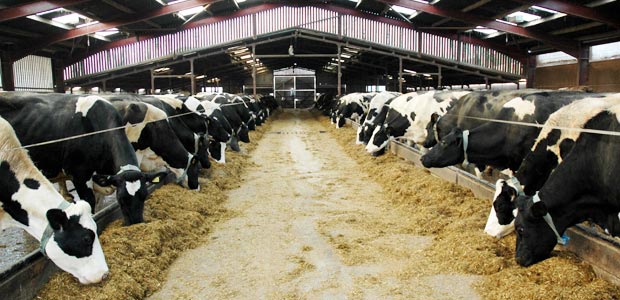
The Tech-Driven Solutions have significantly Accelerated the Indian Dairy Operations.
The Indian dairy industry has been drastically benefitted in recent years from adopting tech-driven products, facilities and solutions. Although the traditional dairy operations have been heavily dependent upon manual labour, the adoption of technology by the Indian dairy farm owners has elevated the industry operations toward greater efficiency and reliance. The operational efficiency within the farm has led to more milk production and business growth.
Let’s find out in what ways technological advancement has changed the scenario of the Indian dairy farm industry.
Health tracking devices for the animal
Health issues in cattle reduce productivity. Animal monitoring systems can help farmers track activity, rumination and changes in production. Devices must be selected and fitted according to their manufacturer’s instructions, with veterinary guidance where appropriate. An alert supports investigation; it does not replace a veterinarian’s diagnosis or treatment plan.
Cattle traffic and feed management
It can be an extremely tedious task to bring cattle to the barns in the controlled manner and feed ration in a balanced way. For example, a sick cow may need more nutrition and a different space to recuperate. Tracking and farm records can help farmers group cattle and arrange appropriate care and balanced nutrition. Productivity gains depend on the herd and management conditions; there is no fixed percentage improvement guaranteed by installing a device.
Milk quality
Milk is perishable. Monitoring devices can record temperature or provide indicators that support quality control, but a sensor does not itself preserve milk or establish that it is safe. Shelf life depends on raw-material quality, a validated treatment, hygienic packaging and storage. Pasteurized milk needs a refrigeration chain. Commercially sterile UHT milk in an intact aseptic package is a different product and process; its shelf life should not be attributed to freshness sensors. See Tetra Pak’s packaging and distribution guidance and long-life dairy processing guidance.
Monitoring supply chain
The Indian dairy supply chain is complex. Its unorganised chain owes its dependency on various factors such as storage, temperature, cold chain availability, weather, shelf life, packaging, etc. Technological tools can support timely distribution, temperature monitoring and inventory control. They should be combined with reliable refrigeration, maintenance and clear responses to temperature deviations rather than treated as a guarantee of product quality.
E-commerce marketplace
Technology is building a real-time connection between consumers and businesses. On the back end of the process, the seller is linked to the farm owners to ensure the smooth in-flow of milk. More than ever, it has also become easy for the seller to ensure product traceability on both sides of backward and forward linkages. Furthermore, due to technological advancement, dairy producers can obtain doorstep services on their smartphones.
Farm management systems
A dairy farm performs at its best to ensure that all of its activities are running efficiently. Tech-led farm management systems can help in the digitalisation of output and operation processes. Access to smartphones and other advanced tools have given farmers access to wider markets, verifiable knowledge, and other high-quality services that have empowered dairy owners. For example, in the collection and payment of milk, the online payment mode is easing the financial operations wherein the money can be digitally transferred into the farmer’s account, providing them financial independence.
Conclusion
The above is an illustrative, not exhaustive, list of technologies used in the dairy industry. Select tools against a defined operating problem, train the team, and measure results rather than assuming that technology alone guarantees business growth.
About the Author
Amol Ghodke is a dairy consultant with experience in different facets of dairy business, including training, branding, sales and marketing. His work has included organisations such as Topfoods-(S.A), Marmum Dairy Farm (Dubai), Awesome Dairy (Mumbai) and Sri Surabhi Dairy.