
Revolutionizing Dairy Farming in India: 10 Essential Tips for Compost Bedded Pack Barn Success
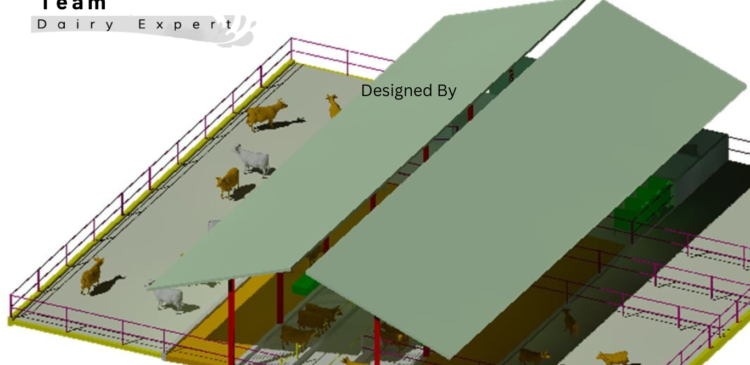
Compost bedded pack barns are one option for dairy cattle housing. Their performance depends on maintaining a suitable resting surface, ventilation and consistent bedding management. Poor management can create hygiene and udder-health problems.
Planning note: The following points are a discussion framework, not a validated design specification for every Indian farm. Cow size, stocking density, local humidity, monsoon conditions, bedding availability and operating practices must be assessed. Recommendations developed in another climate should not be presented as automatically ideal for Indian breeds.
1. Space per Cow
Size the resting area against the actual herd and expected pack conditions. Avoid treating a single square-feet-per-cow figure as a universal minimum or a guarantee of cow comfort. Review stocking density during wet weather as well as in dry conditions.
2. Barn Orientation
Assess sun exposure, prevailing winds, rainfall entry, terrain and surrounding buildings when choosing orientation. Do not select an east-west alignment without considering the full site and ventilation design.
3. Cooling and Ventilation
Plan natural and mechanical ventilation together. Check airflow at cow level, heat-stress conditions and how the system will help maintain the bedding. Fan selection and placement should be part of an engineered design.
4. Feed and Water Access
Provide appropriate feed access, drinking-water access and circulation routes for the herd. Check whether competition or congestion prevents animals from resting, eating or drinking normally.
5. Retaining Walls
Balance bedding retention, access, drainage and cow-level airflow. Wall dimensions should follow the actual layout and structural design rather than an unverified standard height.
6. Pack Management
Regular, uniform tilling introduces air into the pack. University of Kentucky guidance describes twice-daily stirring and emphasises a dry resting surface. Choose the equipment and working depth for the pack and floor construction, and manage cow access safely during the operation. Source: University of Kentucky Extension.
7. Bedding Storage
Plan protected storage and a reliable supply of suitable bedding, including periods of monsoon disruption or seasonal price changes. A design that depends on unavailable dry bedding is not operationally robust.
8. Bedding Material
Assess dryness, particle characteristics, contamination risks, availability and suitability for the tilling system. The University of Kentucky guidance discusses sawdust and dry, fine wood shavings; local alternatives need assessment rather than automatic substitution.
9. Bedding Depth and Renewal
Match starting depth and renewal to the equipment, floor, moisture and operating conditions. Add dry material when needed to maintain the resting surface. Do not transfer a Northern Hemisphere spring/fall cleaning calendar directly to every Indian location. Reference: bedding start-up and renewal guidance.
10. Mastitis Prevention
Combine clean, dry bedding with effective milking hygiene and monitoring of udder health. Have the herd veterinarian determine diagnosis, treatment and any appropriate vaccination programme. This article does not recommend a blanket E. coli or Klebsiella vaccination protocol.
A compost barn is a management system, not simply a shed design. Evaluate whether the farm can sustain the labour, bedding, ventilation and monitoring it requires before committing to construction.